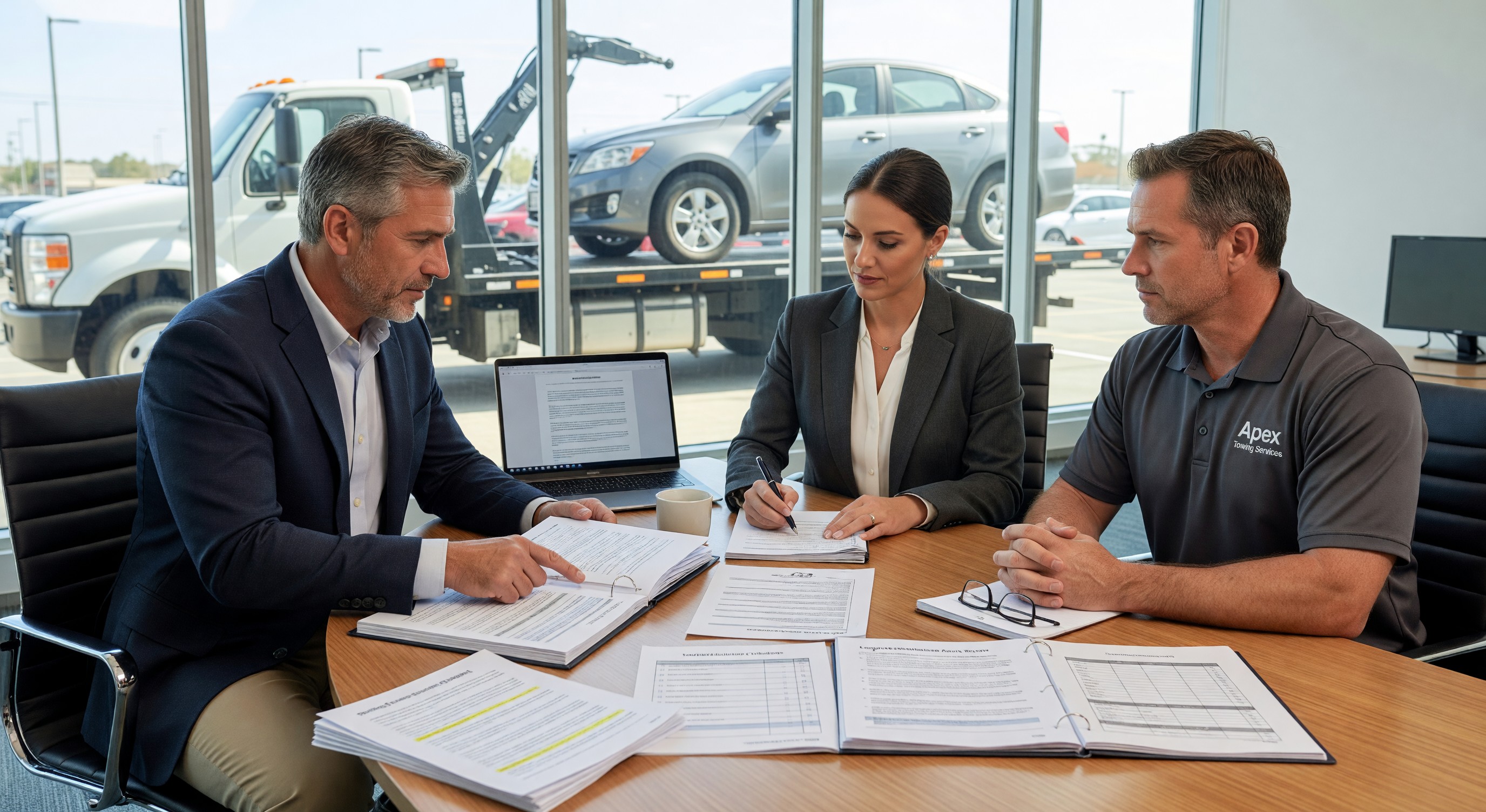
The towing company is one of the most sensitive vendor relationships in parking management. When a towing company performs an unauthorized or improper tow, the vehicle owner’s anger is directed at the property — not the towing company. When a towing company stores vehicles poorly or releases them discourteous, the property’s reputation suffers.
At the same time, towing enforcement is an essential tool for managing unauthorized parking. Without it, time limits become suggestions, reserved spaces become contested, and fire lanes become informal parking areas.
Selecting the right towing company, establishing clear contractual requirements, and maintaining oversight of the relationship protects the property from legal liability and reputational damage.
Understanding State Towing Regulations
Private property towing is regulated by state law in most states. The specifics vary, but common requirements include:
Property owner authorization: The tow must be authorized by the property owner or their authorized agent. A property manager can authorize towing; a random bystander cannot.
Signage requirements: Most states require specific signage at the property as a condition of towing authority. Requirements typically specify sign dimensions, required text (often including towing company name and phone number, and a statement that unauthorized vehicles will be towed), sign placement (at each entrance, at intervals within the lot), and lighting or reflectivity for 24/7 enforcement.
Notification requirements: Most states require notification to local law enforcement when a vehicle is towed from private property. The notification establishes a public record that the vehicle was towed (not stolen) and provides a resource for vehicle owners to locate their car.
Storage and release requirements: Regulations typically specify maximum storage fees, hours during which vehicles must be releasable (often 24/7 after initial hold period), and documentation required for vehicle release.
Fee limits: Many states cap the fees a towing company can charge for private property tows, including hook fees, storage fees, and administrative fees.
Confirm the specific requirements in your state before establishing any towing program. Non-compliant towing creates legal liability for both the towing company and the property.
Qualifying Towing Companies
Not all licensed towing companies are appropriate for private property enforcement work.
Licensing and insurance: The towing company must hold a valid state towing license. Insurance requirements typically include commercial auto (for the tow trucks), garage keeper’s liability (for vehicles in storage), and commercial general liability. Require certificates of insurance naming your property as additional insured.
Compliance track record: Ask about the towing company’s history of customer complaints and disputes, and whether they have been subject to regulatory actions for improper towing practices. Local Better Business Bureau records and consumer protection agency complaint databases provide some visibility.
Storage facility quality: Visit the storage facility where towed vehicles will be held. Is it secure? Is it protected against weather? Is it clean and professional? The storage facility’s appearance and operation reflects on your property when vehicle owners go to retrieve their cars.
Customer service approach: How does the towing company handle vehicle releases? Are staff professional and customer-oriented? Can owners reach the company at any hour? The customer service quality at vehicle release is where your property’s association with the towing company is most visible to the affected person.
Establishing the Towing Authorization Agreement
The towing authorization agreement between your property and the towing company governs the enforcement relationship. Key provisions:
Authorization scope: Clearly define what violations authorize towing. Fire lane violations, blocking access aisles, accessible space violations without credentials, and time limit violations are standard. Define whether any violations require owner-agent approval before towing or whether the towing company has blanket authority for defined violations.
On-call versus dedicated patrols: Will the towing company patrol your facility proactively, or will they respond only to your calls? Proactive patrol is more effective for time-limit enforcement; on-call response is appropriate for specific violation events.
Fees and revenue sharing: Some property owners receive a portion of the towing fee from the towing company in exchange for providing the enforcement territory. This arrangement creates a financial incentive for both parties that can lead to complaints about predatory towing. Be aware of this dynamic and ensure your enforcement program is legitimate, not revenue-driven.
Notification obligations: Require the towing company to follow all applicable state notification requirements immediately after each tow. Document notification in the towing log.
Dispute resolution: Establish a procedure for handling disputes about specific tows. If a vehicle was towed incorrectly (wrong space, owner was present, valid placard was overlooked), the process for expediting vehicle release and adjusting or waiving fees should be clear.
Monitoring Towing Company Performance
Once a towing company relationship is established, monitor performance systematically.
Towing log review: Require the towing company to provide a log of all tows from your property. Review monthly. Look for patterns: tows that generate repeated customer complaints, tows from spaces or times that seem inconsistent with your enforcement intent, or gaps in required documentation.
Compliance check: Periodically verify that required signage is in place and meets legal requirements. Towing authority depends on compliant signage; signage that has been damaged, faded, or removed creates legal vulnerability.
Customer complaint tracking: Receive and track all customer complaints about tows from your property. Patterns of complaints about specific tow types, specific operators, or specific time windows warrant investigation and discussion with the towing company.
Handling Disputed Tows
When a vehicle owner disputes a tow, the property and towing company need to respond appropriately.
Document first. If a tow is disputed, gather documentation: what violation was cited, photographs of the vehicle in violation (if available), the date and time, and who authorized the tow.
Evaluate the dispute objectively. Was the tow compliant with your enforcement policy? Was the signage adequate? Is there any merit to the owner’s claim that they did not violate the posted rules? Objective evaluation protects you from defending indefensible tows.
Provide a clear escalation path. Vehicle owners who believe their tow was improper should have a clear path to dispute it — a specific contact at the property and at the towing company, with a defined resolution timeline.
When to release fees. If a tow was improper, offer to cover the towing and storage fee. The cost of that gesture is far less than the reputational cost of defending an improper tow publicly or legally.
FAQ
Can I tow vehicles that block my access aisles even without specific signage for that violation? Most states provide authority to tow vehicles that block access aisles, fire lanes, and traffic flow even without specific signage for those violations. However, signage requirements for your general towing authority (the “unauthorized vehicles will be towed” notice) must still be in place. Confirm applicable state law requirements with your legal counsel.
What are my liability exposure risks from a towing program? The primary risks are: (1) improper tows that result in damages claims or regulatory penalties; (2) vehicle damage during towing or storage; (3) personal property claims for items in towed vehicles; (4) ADA claims if accessible space enforcement is improperly conducted. Your towing authorization agreement should allocate responsibility between the property and the towing company for each risk category.
How often should I review my towing program? Annually, and whenever there is a significant change in enforcement policy, signage, or towing company relationship. Annual review should include: signage adequacy check, compliance with applicable state regulations, review of complaint volume and patterns, and assessment of whether the towing company’s service continues to meet standards.
Does accepting money from the towing company create a conflict of interest? Yes, potentially. Revenue sharing arrangements (the property receives a portion of each towing fee) create a financial incentive for aggressive enforcement that can be perceived as predatory. Some states prohibit or restrict these arrangements. Even where legal, the appearance of a revenue motivation for towing can damage the property’s reputation significantly when individual tows are disputed publicly.
Further Reading from Authoritative Sources
- International Parking and Mobility Institute towing enforcement resources — parking-mobility.org (IPMI) is on the whitelist as the primary parking industry authority with directly relevant towing enforcement and vendor management content for parking facility managers.
- ADA.gov accessible parking enforcement and towing guidance — ada.gov is on the whitelist as the DOJ’s ADA information portal and provides the compliance context for accessible space towing enforcement discussed in this article.