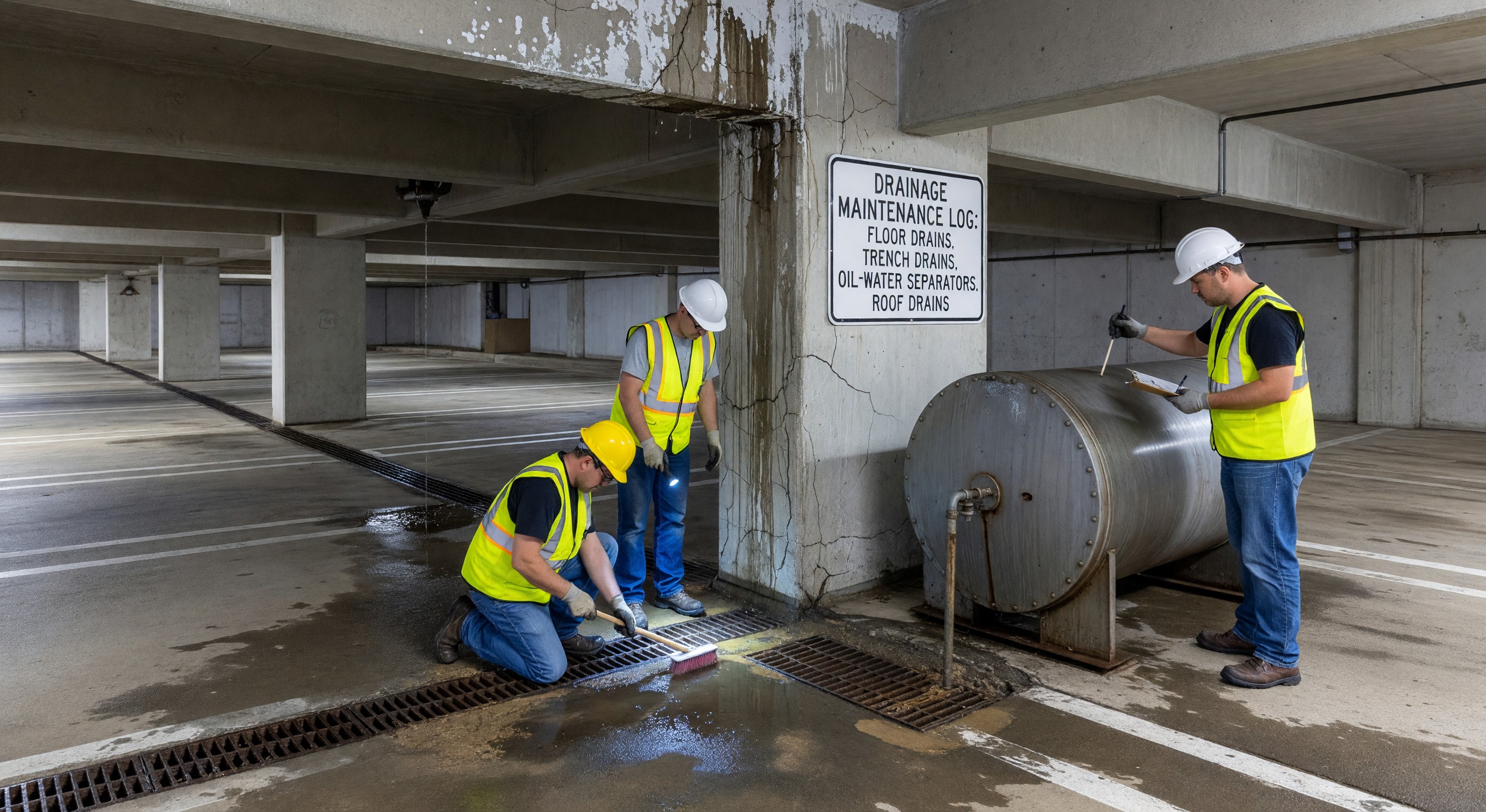
Drainage system maintenance is one of the most important — and most neglected — aspects of parking facility management. In parking structures, drainage serves three functions simultaneously: preventing standing water that creates safety hazards and accelerates concrete deterioration, managing vehicle fluid contamination before it reaches stormwater systems, and protecting the structural integrity of the deck and subgrade.
When drainage systems are neglected, the consequences compound quickly. Blocked drains cause standing water that infiltrates concrete slabs. Water-saturated concrete deteriorates from freeze-thaw damage and chemical attack. Oil and sediment accumulate beyond the capacity of treatment systems and discharge to storm drains. None of these outcomes is acceptable from a safety, structural, or regulatory standpoint.
Understanding Your Drainage System
Before maintaining a drainage system, map it. Know where water enters the facility, how it travels across and through the structure, where it collects and drains, and where it exits.
Deck drainage: Parking decks are sloped to drain water toward collection points. Typical slopes are 1 to 2 percent toward drain locations. Drains are connected to a below-grade collection system that routes water to the storm drain or to a treatment device.
Trench drains: Trench drains run along the low sides of sloped decks or at ramp transitions. They collect water from larger areas and are prone to debris accumulation.
Floor drains and area drains: Point drains at low spots in parking decks catch water that has traversed the deck surface.
Roof drains: Open-top parking structures may have roof drains for ponded water in level areas.
Oil-water separators: Below-grade treatment devices that separate oil and sediment from parking lot runoff before discharge. Required by most jurisdictions to prevent vehicle fluid contamination of storm drains.
Sump pumps: Below-grade parking structures almost always have sump systems to collect groundwater infiltration and roof drain water. Sump pump failure in a below-grade garage can cause significant flooding.
Floor and Trench Drain Maintenance
Parking facility floor drains require regular cleaning to maintain flow capacity. Vehicle traffic deposits sand, grit, organic debris, and vehicle fluids that accumulate in drain bodies and connecting pipe.
Inspection frequency: Inspect all floor drains and trench drains monthly. Confirm that drain grates are in place, that drain openings are unobstructed, and that water flows when tested. Annual high-pressure hydro-jetting of connecting drain lines removes accumulated debris from pipe walls that routine water flow does not dislodge.
Cleaning procedure: Remove drain grates and remove accumulated debris from drain bodies. Hydro-jet drain lines annually, with more frequent service in facilities with high vehicle activity or debris loads. A drain that fills with debris within weeks of cleaning may have a pipe defect that is causing backup — camera inspection of the drain line will identify blockages or pipe damage.
Trench drain maintenance: Trench drain grates should be removed and cleaned quarterly. Many trench drains have sumps at low points — clean these sumps when debris accumulates to one-third or more of the sump depth.
Oil-Water Separator Maintenance
Oil-water separators (also called oil interceptors or gravity separators) are the most maintenance-intensive drainage components in parking facilities. They must be cleaned regularly to maintain capacity and regulatory compliance.
How they work: Parking runoff flows into the separator, where the difference in specific gravity between oil/grease and water causes oil to float to the surface of the first chamber. Water decants under a baffle to an outlet chamber and exits to the storm drain. Sediment settles to the bottom of the inlet chamber.
Failure mode: When the separator’s oil storage capacity is full, oil breaks through to the outlet and discharges to the storm drain — a regulatory violation. When the sediment chamber is full, sediment carries over to the treatment section and reduces effectiveness.
Maintenance frequency: Inspect oil-water separators quarterly. Service (pump out accumulated oil and sediment) when oil depth exceeds 2 to 4 inches or sediment depth exceeds one-quarter of the chamber depth, or at minimum annually regardless of apparent condition.
Documentation: Document every inspection and service event: date, service contractor, oil volume removed, sediment volume removed, and observation of separator condition. Retain records for at least three years — this documentation supports stormwater compliance demonstration.
Sump Pump Maintenance
Below-grade parking structures depend on sump pumps to prevent flooding. A sump pump failure during a heavy rain event can flood a below-grade garage with dramatic speed.
Monthly inspection: Verify that sump pump floats actuate the pump at appropriate water levels. Manually trigger the pump by raising the float to confirm operation. Inspect pump discharge piping for blockage.
Annual service: Test pump flow rate against rated capacity. Inspect impeller and pump body for wear and corrosion. Inspect and clean intake screen. Verify backup power for sump pumps — many systems have battery backup or generator-connected pumps for power outage events.
Redundancy: Critical below-grade applications should have redundant sump pump systems. A single pump failure that causes significant flood damage will cost far more than the investment in redundant pumps. If your facility has a single pump, evaluate adding a backup.
Deck Waterproofing and Drainage Relationship
Drainage systems cannot compensate for failed deck waterproofing. If the deck waterproofing system has failed, water that penetrates the deck surface reaches the structural concrete and reinforcing steel below, regardless of how well the drainage system functions.
Inspect deck surface drainage patterns annually. Areas where water pools rather than flowing to drains indicate settled areas or drain blockages. Persistent wet staining on the underside of deck elements beneath pooling areas indicates active water infiltration through the deck.
Water infiltration through deck surfaces is one of the most significant threats to parking structure longevity. Address drainage blockages promptly, and schedule deck waterproofing inspection and maintenance as part of your preventive maintenance program.
Seasonal Drainage Considerations
Winter: Freeze-thaw cycles can cause drain bodies to heave or shift, affecting drainage grades. Inspect drain locations after freeze-thaw events for displacement. Avoid using snowplows that can damage drain grates — train equipment operators on drain locations.
Spring: Spring thaw is typically the highest-flow period for parking drainage systems. Clear all drains and verify sump pump operation before the spring melt season.
Fall: Clear leaves and organic debris from drains before the dormant season. Decaying organic material in drains creates drain body corrosion and pipe blockages.
FAQ
How do I know if my oil-water separator is functioning properly? Inspect quarterly. Proper function means oil floating in the first chamber and clear effluent exiting the outlet. Visible oil in the outlet chamber or at the discharge point indicates separator failure. Annual inspections by a licensed contractor with appropriate vacuum equipment provide the most reliable assessment.
Can I clean my own drains or do I need a contractor? Routine drain body cleaning (removing grates, pulling debris from drain bodies) can be performed by maintenance staff. Hydro-jetting of drain lines and oil-water separator pumping require specialized equipment and should be contracted to qualified service providers. Separator pump-out material must be disposed of properly — document disposal with contractor-provided manifests.
What causes a drain to backup if the line appears clear? Backups can occur from blockages further downstream, a capacity mismatch between the drain flow rate and the receiving system, roots in drain lines, or a failed or blocked separator. Camera inspection of drain lines identifies the location and nature of blockages beyond the immediate drain body.
How do I add drainage capacity to a facility with chronic pooling problems? Work with a civil engineer to identify the drainage deficiency — whether it is inadequate slope, insufficient drain capacity, blocked discharge points, or undersized piping. Solutions range from adding drain points in low areas to installing supplemental trench drains. Major drainage system improvements may require building permits.
Drain cleaning and inspection is one of several items to coordinate in your summer maintenance window plan, alongside concrete inspection, striping, and equipment PM visits.
Further Reading from Authoritative Sources
- EPA guidance on oil-water separator maintenance and stormwater compliance — epa.gov is on the whitelist as the primary federal environmental authority and directly addresses the oil-water separator compliance framework discussed in this article.
- International Parking and Mobility Institute drainage maintenance resources — parking-mobility.org (IPMI) is on the whitelist and provides parking-specific drainage maintenance guidance that translates environmental requirements into facility maintenance practice.