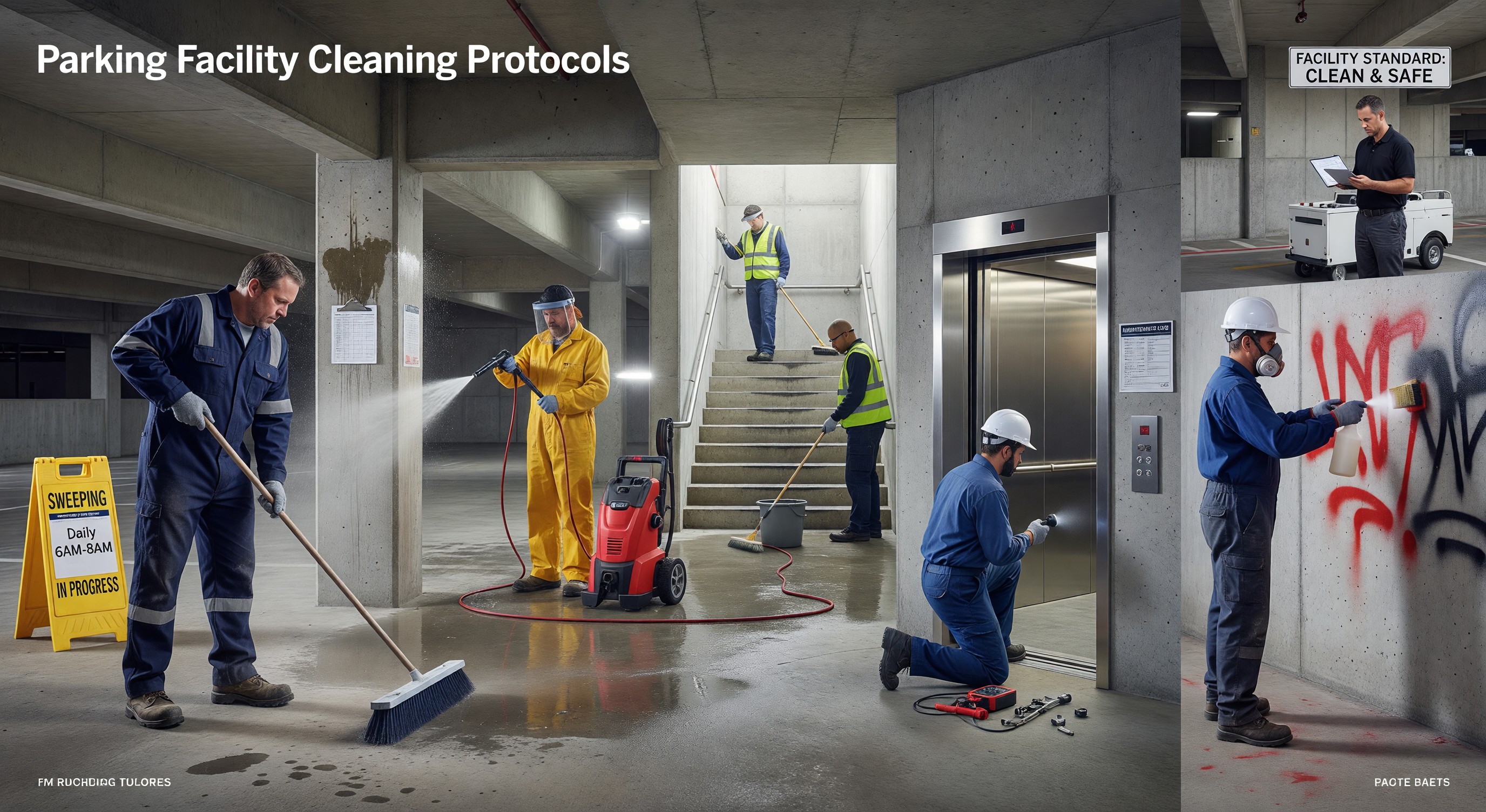
Cleanliness in parking facilities directly affects the user experience, security, and the facility’s physical condition. Parking environments accumulate vehicle debris, oil, sediment, and litter at rates that outpace almost any other commercial facility type. A cleaning program that keeps pace with this accumulation rate maintains the facility in a condition that reflects well on the property; one that falls behind creates a downward spiral where additional littering, vandalism, and graffiti follow visible neglect.
This guide covers the cleaning protocols that maintain parking facilities to an acceptable standard, the frequency requirements for different tasks, and the management practices that keep cleaning programs on track.
Drive Surface Cleaning
Mechanical sweeping is the foundation of parking facility housekeeping. Parking surfaces accumulate sand, grit, organic debris, and broken glass that deteriorate pavement surfaces when left in place and create safety hazards.
For surface lots, mechanical sweeping with a self-propelled regenerative air sweeper achieves far better fine-particle capture than a rotary brush sweeper. Fine sediment that a brush sweeper scatters to the edges will be swept into drains; a regenerative air sweeper removes it.
Minimum sweeping frequency: weekly for high-traffic commercial lots; bi-weekly for lower-traffic facilities. Spring is the highest-priority sweeping period — accumulated winter grit, sand, and deicing chemical residue should be removed as quickly as possible after the final frost.
Pressure washing of drive surfaces removes oil stains, biological growth (algae, moss), and accumulated grime that sweeping cannot address. Pressure washing frequency depends on facility type and traffic: quarterly for high-traffic garages, annually for lower-traffic surface lots. Use appropriate chemical pre-treatments for oil stains; plain water under pressure is less effective than pre-treatment plus rinse.
Oil drip mitigation: High-traffic lanes and pay station areas accumulate motor oil from vehicles. Absorbent materials (kitty litter, commercial oil absorbent) applied to fresh spills prevent slipping hazards and reduce the contamination that reaches drains. Establish a spill response protocol for staff.
Stairwell and Elevator Cleaning
Stairwells and elevators in parking structures are high-visibility, security-sensitive spaces that require more frequent attention than the general parking area.
Stairwell cleaning schedule:
- Daily visual inspection and litter removal in heavily used stairwells
- Weekly wet mopping or sweeping
- Monthly pressure washing of landings (quarterly for light-use stairwells)
- Quarterly inspection of walls, ceilings, and fixtures for graffiti, damage, and lighting adequacy
Elevator cab maintenance:
- Daily inspection of cab interior (floor, walls, ceiling, button panel, door edges) — log findings
- Weekly cleaning of cab floor, walls, and door tracks
- Monthly cleaning of door tracks and threshold plates (accumulated debris in tracks is a leading cause of door malfunction)
- Quarterly cleaning of cab ceiling fixtures and ventilation grille
Note: elevator cleaning must be performed carefully to avoid water intrusion into control systems. Follow manufacturer guidance on appropriate cleaning methods for elevator cab interiors.
Graffiti Removal
Graffiti on parking facility surfaces should be removed within 24 to 48 hours of discovery. Rapid removal is one of the most effective graffiti deterrents — surfaces that are promptly restored do not accumulate additional graffiti at the rate that tagged surfaces do.
Removal methods by surface:
- Painted concrete or masonry: solvent-based graffiti remover followed by pressure washing; repaint if needed
- Unpainted concrete: graffiti remover and pressure washing (complete removal from unpainted concrete is more difficult)
- Metal surfaces: solvent remover; repainting with graffiti-resistant paint
- Glass: razor blade scraper for spray paint; glass cleaner afterward
Preventive coatings: Anti-graffiti coatings (sacrificial or permanent systems) on surfaces that are repeatedly targeted make graffiti easier to remove and are worth the investment in high-frequency target areas.
Waste and Recycling Management
Parking facilities generate litter from vehicles, food and beverage packaging, and discarded materials. A waste management program that keeps litter from accumulating maintains both appearance and rodent deterrence.
Receptacle placement: Provide waste receptacles at pedestrian-scale intervals — near elevator lobbies, at facility entrances and exits, adjacent to pay stations. Receptacles that require more than a few steps of detour from the pedestrian path will not be used.
Collection frequency: Empty receptacles before they overflow. Overflowing receptacles create litter that spreads to surrounding areas. In high-traffic facilities, daily or twice-daily collection is appropriate for high-use receptacle locations.
Receptacle maintenance: Clean receptacle exteriors and interiors monthly. Receptacles that are stained, broken, or malodorous deter use. Replace damaged receptacles promptly.
Seasonal Cleaning Considerations
Spring cleanup: The most important annual cleaning event. Remove winter sand and grit from all surfaces, clean out drains and oil-water separators, pressure wash heavily soiled areas, remove salt staining from concrete surfaces (dilute muriatic acid wash may be needed for heavy salt deposits), and inspect all surfaces for winter damage.
Summer: Regular sweeping and debris removal; pressure wash as needed for appearance. Vegetation management (weed pulling from cracks and drainage features) is most active in summer.
Fall: Leaf removal from parking surfaces and drains is critical. Decomposing leaves block drains, create slipping hazards, and stain surfaces. Increase sweeping frequency during peak leaf fall.
Winter: Remove snow and ice promptly from drive surfaces and pedestrian paths. Sand and salt residue management begins with conservative application (reducing accumulation) and continues with cleanup after each storm event.
FAQ
What sweeping equipment is most appropriate for a parking garage versus a surface lot? For surface lots, self-propelled regenerative air sweepers or vacuum sweepers provide the best fine-particle capture. For enclosed garages, smaller walk-behind or compact ride-on sweepers that can navigate parking stall areas are most practical. Dust suppression is important in enclosed garages — dry sweeping without suppression creates dust that settles on vehicles and irritates occupants.
How do I handle biohazard cleanup in parking facilities? Bloodborne pathogen incidents (from accidents, medical emergencies, or violence) require cleanup by trained personnel using appropriate personal protective equipment and biohazard disposal procedures. Do not assign routine maintenance staff to biohazard cleanup without proper training and PPE. Contract with a specialty biohazard cleanup firm for incidents above minor exposure.
What documentation should I maintain for cleaning programs? Maintain a cleaning log that records: date, time, area cleaned, tasks performed, and staff member. This log documents compliance with your cleaning schedule and provides evidence of active maintenance management in premises liability situations. Retain logs for at least three years.
How do I set a cleaning standard for a new or acquired facility? Establish a baseline inspection with photographs of each area of the facility before beginning the cleaning program. Rate each area on a defined scale (excellent/good/fair/poor). Set target ratings for each area type and track actual condition against targets monthly. This objective tracking identifies where the program is succeeding and where additional attention is needed.
Further Reading from Authoritative Sources
- EPA stormwater management guidance for parking facility sweeping — epa.gov is on the whitelist and EPA’s stormwater BMP guidance connects the cleaning protocol content to environmental compliance, a key operational consideration for parking facility managers.
- IFMA facility cleaning standards and janitorial specifications — ifma.org is on the whitelist as a facility management authority whose cleaning standards and documentation frameworks directly apply to the parking facility cleaning protocols in this article.