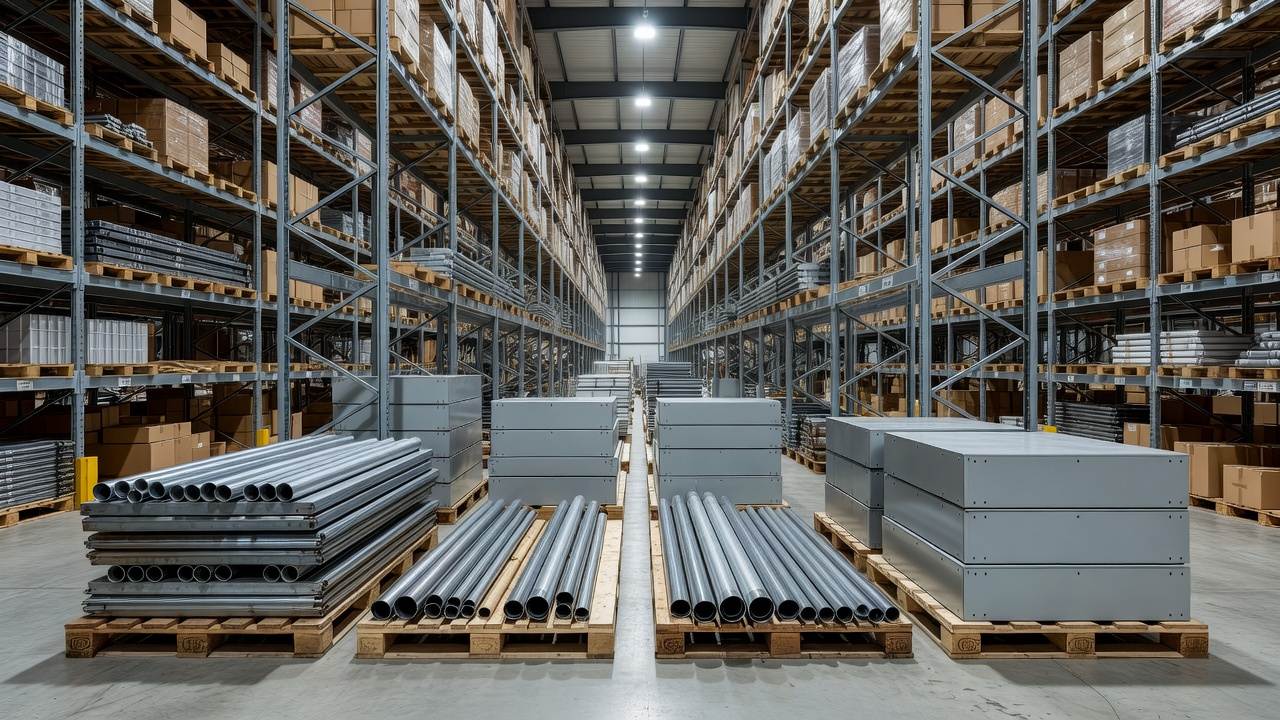
Parking equipment is close to a worst case for metals tariffs. Gate housings, barrier arms, bollards, pay station enclosures, railings, and light poles are steel and aluminum fabrications, and the control boards inside them are semiconductor assemblies. Both categories are now dutiable, and the structure changed in a way most facility budgets have not caught up with.
The change worth understanding before you finalize an FY2027 capital line is not the headline rate. It is the valuation basis and an expiring rate cap.
What actually changed in April 2026
Section 232 tariffs on steel, aluminum, and copper were restructured by proclamation on April 2, 2026, taking effect for goods entered for consumption on or after April 6, 2026. As summarized by trade counsel and customs brokers, the framework now works roughly like this:
- Primary metal articles: 50% of full value.
- Derivative articles: 25% of full customs value. This is the consequential part. Previously, for most derivatives, the tariff applied only to the steel or aluminum content of the product. It now applies to the full customs value of the article.
- Derivatives made entirely from U.S.-smelted, cast, or poured metal: 10%.
- Certain metal-intensive industrial equipment and electrical grid equipment: a capped 15% through December 31, 2027, structured as the difference between 15% and the general HTS Column 1 duty rate, with a floor of 0%. From 2028 the 25% derivative rate applies.
- Semiconductors sit at 25% under separate Section 232 authority.
For a pay station or a PARCS lane controller, the shift from metal-content to full-value assessment can move landed cost by a materially larger amount than the rate change alone suggests, because the dutiable base is now the whole invoice rather than the weight of the steel in the cabinet.
The three questions to ask every vendor before you budget
Vendor quotes are the only reliable source for your specific equipment, and most quotes do not volunteer this information. Ask for it in writing:
- What is the HTS classification, and does this article qualify for the capped 15% industrial-equipment treatment through 2027? The answer determines whether your replacement project has a genuine deadline. If your equipment class qualifies, purchasing and importing before December 31, 2027 avoids a step up to 25%. If it does not qualify, that urgency is fictional and you should not let it drive a schedule.
- What is the country of melt and pour, and is any of this line made from U.S.-melted metal? The 10% derivative rate is only available for articles made entirely with U.S.-smelted, cast, or poured metal. A domestic-melt option may now beat an imported one on landed cost even at a higher list price.
- Is this quote firm, and for how long? This is where facilities get hurt. Ask specifically whether the agreement contains a tariff surcharge or cost-adjustment clause allowing the vendor to pass through rate changes after order placement. A “firm” quote with a pass-through clause is not a firm quote, and a purchase order approved in one fiscal year can invoice materially higher in the next.
Get all three in the quote document itself, not in an email from a sales rep. Our guidance on warranty and service-contract management covers the adjacent question of what happens to parts pricing over the equipment’s life, which the same clauses tend to govern.
Where this lands in the budget: opex, not only capex
Capital replacement gets the attention, but the recurring exposure is larger over a budget cycle for most facilities.
Gate arms are consumables. They get struck, they break, and they are replaced on a schedule set by driver behavior rather than by engineering life. That makes them an operating line, and a tariffed operating line inflates every month rather than once per project. If your facility replaces arms regularly, a bulk annual order — with the arms held on site — converts a moving cost into a known one for the year and hedges against mid-year price adjustments.
Spare parts and boards. Semiconductor-bearing components at 25% affect break-fix costs, not just new installations. Ask your service provider whether parts pricing under your existing agreement is fixed or indexed, and stock the two or three failure-prone items with the longest lead times.
Contingency. Build an explicit tariff contingency into FY2027 capital estimates for any project with imported hardware, and label it as such so it survives review. A line item that reads “tariff and landed-cost contingency” with the April 2026 rate structure cited behind it is defensible in a way that a padded base estimate is not.
Timing decisions that are actually decisions
Three levers are worth evaluating with real numbers rather than instinct:
Buy before the cap expires — if you qualify. For equipment inside the capped 15% category, the difference between importing in 2027 and importing in 2028 is ten percentage points of full customs value. On a multi-lane PARCS replacement that is a number worth scheduling around. Confirm eligibility from the HTS classification first.
Extend rather than replace. Refurbishment, controller retrofits, and component-level repair carry much less tariff exposure than whole-unit replacement. Equipment two or three years from planned end of life may be worth extending through the tariff window rather than replaced into it — provided the extension is a maintenance decision that stands on its own and not a deferral that produces a failure during a peak season.
Re-quote quarterly on anything not yet ordered. Tariff structures have changed more than once inside the past two years, including changes to which products are in scope. A multi-year fixed budget built on a single quote from early in the fiscal year is a forecast, not a plan. Re-price open projects each quarter and document the delta.
What to put in the FY2027 submission
For each planned parking equipment purchase, carry four data points into the budget request: the vendor quote with HTS classification and tariff treatment stated, the country of melt and pour, whether the quote is firm or subject to pass-through, and an explicit tariff contingency percentage. For recurring items — arms, boards, service parts — carry the annual quantity and a decision on whether you are pre-buying.
That is a modest documentation burden and it changes the conversation with finance from “equipment costs are up” to a specific, sourced number with a date attached. Tariff rates will keep moving. The facilities that handle it well are the ones whose quotes disclose the treatment, whose contracts do not allow silent pass-through, and whose consumables were bought before the invoice changed.